
 by Artist (758)
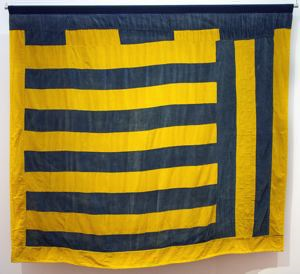
Emma Mae Hall Pettway
American, 1932–2021
Founded in 1966 in West Alabama at the beginning of the Black Civil Rights movement, the Freedom Quilting Bee was one of the few Black women's cooperatives in the United States. The women working at the Bee were primarily members of the Black families that settled and lived at an Alabama river community known as Gees Bend.
In 1972, the Bee obtained a contract to produce pillow covers for the Sears, Robuck, and Company made of corduroy, a fabric that was rarely used by the quilters of that era who generally used fabrics intended for clothing or upholstry, and usually recycled or cast off pieces of cloth. Subsequently, the larger leftover remnants of corduroy used to make the pillow covers were taken home by the workers or given to family or friends.
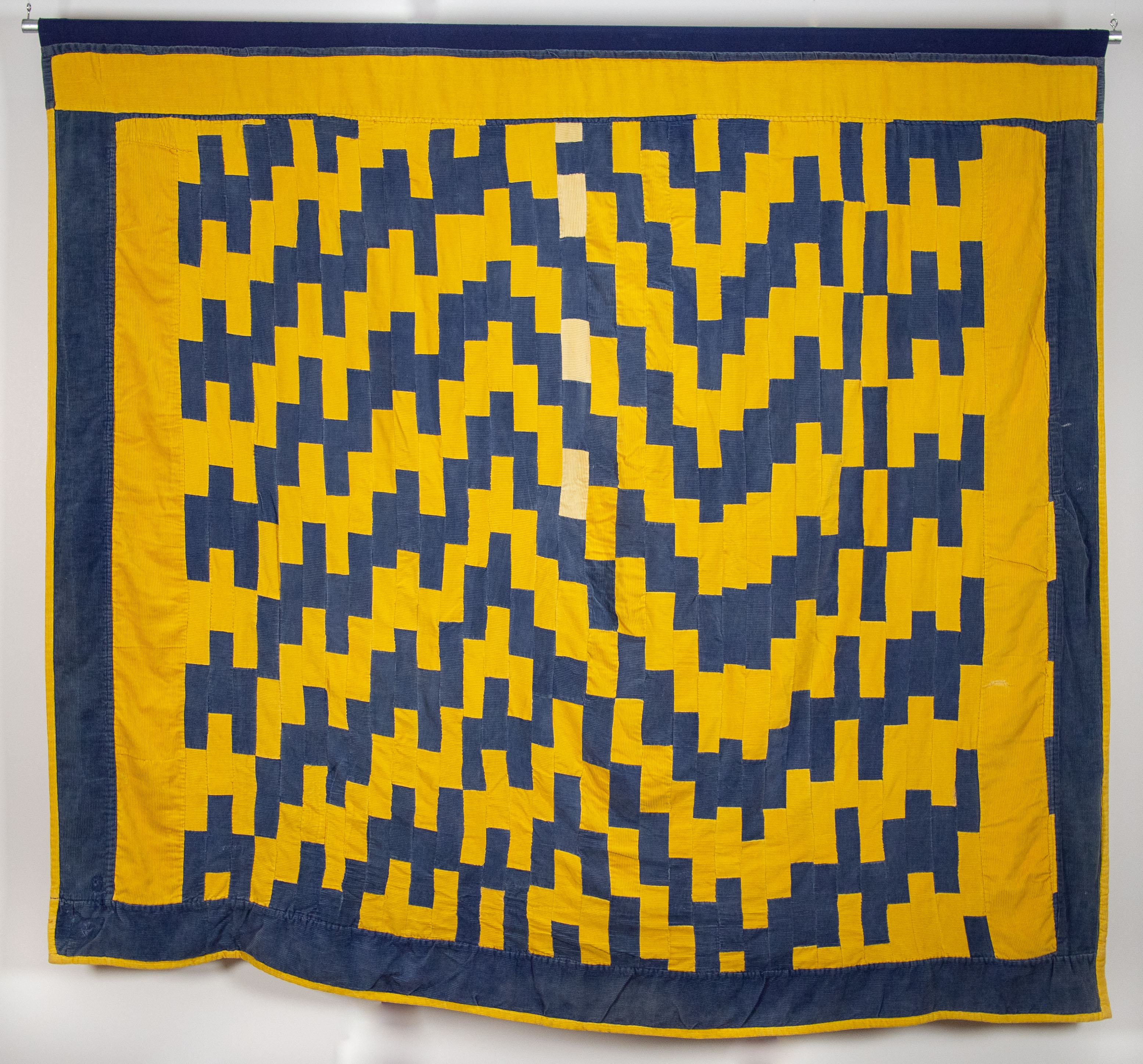
As with this quilt by Emma Mae Hall Pettway, most of the corduroy quilts were designed and qulited by individual quilters and featured larger forms cut at right angles. The cloth was prone to shear and fray when cut on the diagonal, but its sturdy, durable character and bright colors were perfect for compositions like this one that are highly geometric..
American, 1932–2021
Bars/Strips
about 1975
Object Type:
Textile
Dimensions:
78 x 92 in. (198 x 234 cm)
Medium and Support:
Cotton corduroy
Accession Number:
2021.0004.0003
Credit Line:
Montgomery Museum of Fine Arts Association Purchase and Gift of the Souls Grown Deep Foundation from the William S. Arnett Collection
Copyright:
© Emma Mae Hall Pettway/Artists Rights Society (ARS), New York
Founded in 1966 in West Alabama at the beginning of the Black Civil Rights movement, the Freedom Quilting Bee was one of the few Black women's cooperatives in the United States. The women working at the Bee were primarily members of the Black families that settled and lived at an Alabama river community known as Gees Bend.
In 1972, the Bee obtained a contract to produce pillow covers for the Sears, Robuck, and Company made of corduroy, a fabric that was rarely used by the quilters of that era who generally used fabrics intended for clothing or upholstry, and usually recycled or cast off pieces of cloth. Subsequently, the larger leftover remnants of corduroy used to make the pillow covers were taken home by the workers or given to family or friends.
As with this quilt by Emma Mae Hall Pettway, most of the corduroy quilts were designed and qulited by individual quilters and featured larger forms cut at right angles. The cloth was prone to shear and fray when cut on the diagonal, but its sturdy, durable character and bright colors were perfect for compositions like this one that are highly geometric..
Additional Images
Click an image to view a larger version
Back
Portfolio List
Click a portfolio name to view all the objects in that portfolio
This object is a member of the following portfolios:
Your current search criteria is: All Object records.